Waterjet Machine

Waterjet Machine

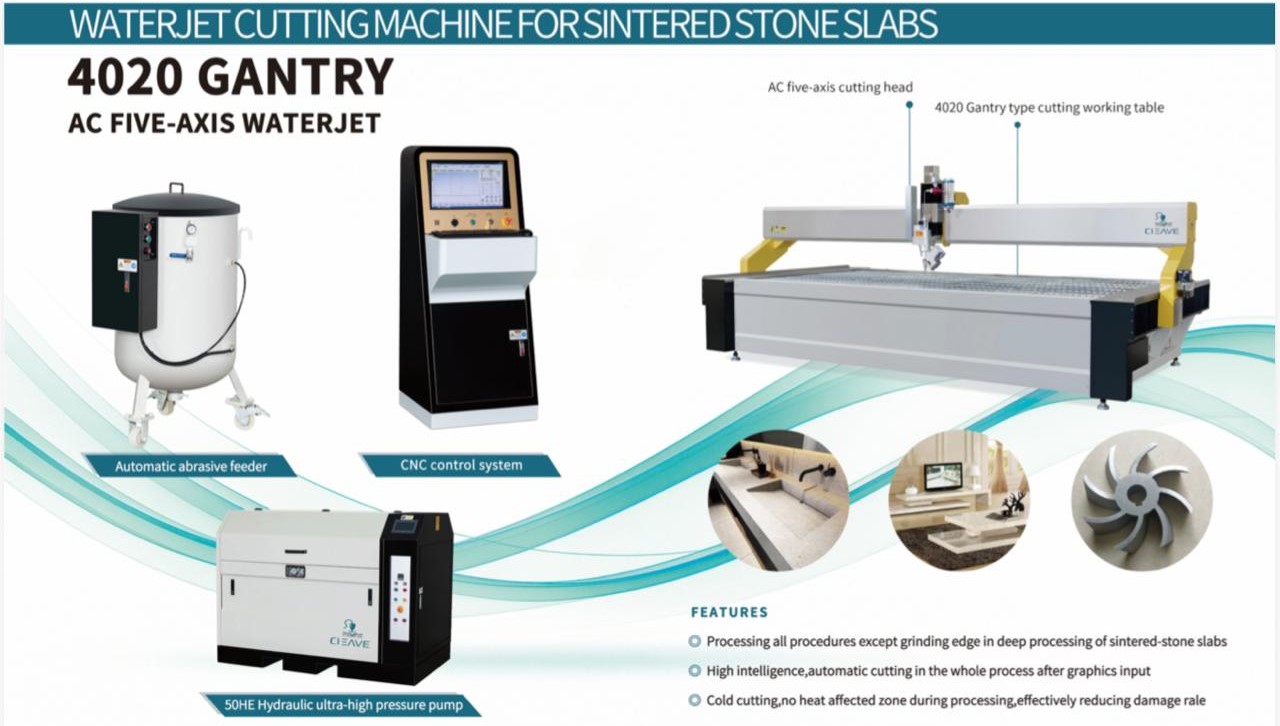
Waterjet Machines are cutting-edge tools that utilize high-pressure water mixed with abrasive particles to cut through a wide range of materials, including metals, plastics, stone, glass, and composites. This cold-cutting process eliminates the risk of heat distortion or material hardening, which can occur with traditional cutting methods like laser or plasma cutting. The ability to cut intricate shapes with high precision, without the need for heat, makes waterjet machines ideal for industries such as aerospace, automotive, and stone fabrication.
Key Features of Waterjet Machines

  • High-Pressure Cutting Technology: Waterjet machines use water pressurized to extremely high levels (up to 60,000 psi) to accelerate the cutting process. This pressure, combined with abrasives like garnet, enables the machine to cut through tough materials with precision and ease, making it ideal for thick, hard materials that other cutting methods may struggle with.
  • No Heat Affected Zone (HAZ): Unlike traditional cutting methods that use heat to melt or vaporize the material, waterjet cutting uses a cold process. This means there is no heat-affected zone (HAZ), ensuring that the material does not suffer from thermal distortion, hardening, or changes in material properties. This is particularly important when working with heat-sensitive materials like titanium, certain alloys, or plastics.
  • Versatility in Materials: Waterjet machines can cut a wide range of materials, from soft materials like rubber, foam, and plastics to hard materials such as steel, glass, ceramics, and stone. The versatility of waterjets makes them a popular choice across various industries, offering the ability to handle materials of varying thicknesses and hardness.
  • Precision Cutting: Waterjet machines offer very high precision with tolerances as tight as 0.003 inches. The combination of high-pressure water and abrasive particles allows for intricate cuts, fine details, and smooth edges without the need for post-processing. This makes waterjet cutting ideal for complex shapes and designs.
  • Minimal Burrs and Surface Damage: The nature of waterjet cutting results in minimal burrs and surface damage. The smooth edges left by the cutting process reduce the need for additional finishing work, saving time and labor costs in manufacturing.
  • Eco-Friendly Operation: Waterjet cutting is an environmentally friendly process. It generates minimal waste and uses water, which can be filtered and reused in many systems. Additionally, the process produces fewer airborne pollutants compared to other methods like plasma or laser cutting.
  • Ability to Cut Complex Shapes: Waterjet machines are highly effective at cutting intricate and complex shapes that would be difficult or impossible to achieve with traditional cutting methods. The high precision and flexibility of the cutting head allow for sharp corners, tight radii, and detailed patterns, making waterjets ideal for artistic and design-focused industries.
  • Multi-Axis Cutting Capability: Many waterjet machines come with 5-axis or even 6-axis cutting heads, enabling the cutting of complex three-dimensional shapes and geometries. This feature is particularly valuable in industries such as aerospace and automotive, where complex parts with varied angles and contours are often required.

Similar Posts

  • VTL

    Vertical Turret Lathe The Vertical Turret Lathe (VTL) is a specialized, heavy-duty CNC machine designed for turning large and heavy workpieces with exceptional precision. Featuring a vertically oriented turret, the VTL allows for better access to the workpiece, enabling efficient and precise machining of large, complex components. VTLs are essential for industries where size and…

  • CNC Lathe

    Computer Numerical Control Lathe The CNC Lathe is a precision machine tool designed for turning operations, allowing high-precision cutting of cylindrical parts. It utilizes a rotating tool to remove material from a workpiece, offering excellent repeatability and versatility for various industrial applications. Ideal for creating complex shapes, such as threads, tapers, and contours, CNC lathes…

  • Deep Hole Drilling

    Deep Hole Drilling Deep Hole Drilling Machines are specialized CNC machines designed to drill deep, accurate holes in long, slender workpieces. These machines are critical for high-efficiency drilling of deep holes that require precise tolerances and excellent surface finishes, especially when working with complex or high-strength materials like titanium, stainless steel, and superalloys. Deep hole…

  • GMC

    Gear Manufacturing Centers Gear Manufacturing Centers (GMCs) are specialized CNC machines tailored to the production of gears and gear-related components with exceptional accuracy and efficiency. These machines are equipped with advanced gear-cutting tools and technologies, enabling them to handle a wide range of gear manufacturing needs, such as hobbing, shaping, and grinding. GMCs are essential…

  • VMC

    Vertical Machining Centers Vertical Machining Centers (VMCs) are a versatile CNC machine used for precision milling, drilling, and tapping operations. With a vertically aligned spindle, VMCs offer precise control over the cutting process, making them ideal for a wide range of applications such as prototype development, small-batch production, and high-precision components. The flexibility of VMCs…

  • HMC

    Horizontal Machining Centers Horizontal Machining Centers (HMCs) are known for their superior productivity and stability, particularly for large-scale operations. The horizontal orientation of the spindle allows for better chip removal and more efficient cutting on complex workpieces. HMCs are commonly used for high-volume production of large parts, such as automotive engine blocks, aerospace components, and…